
Wildlife Rehabilitation

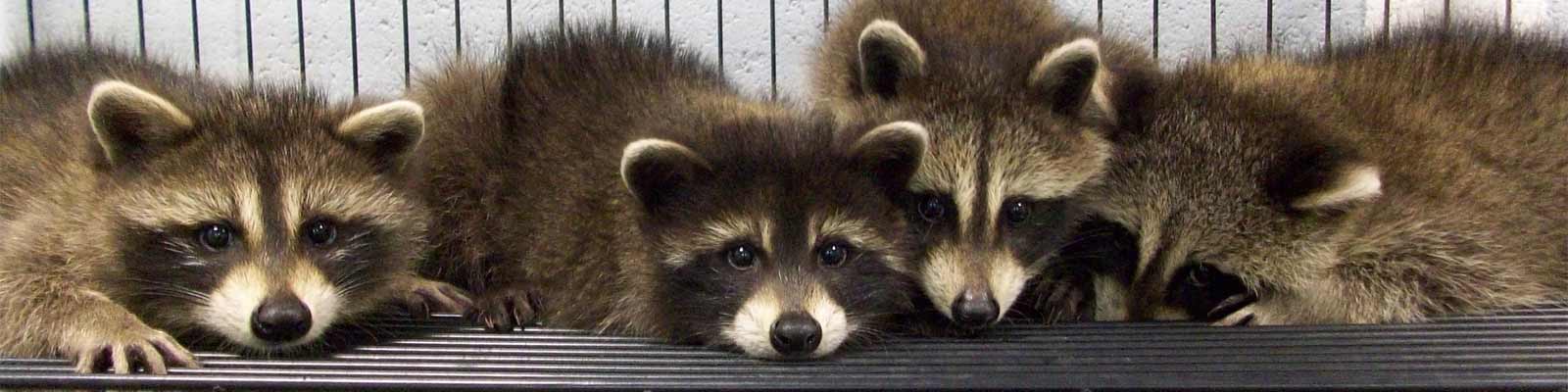
Baby raccoons should receive care from a licensed wildlife rehabilitator. Wildlife rehabilitators are trained to provide care for wild animals. They are licensed to do so by provincial and/or federal governments.

Baby raccoons need specialized formula, species-specific housing, and medical treatment that you cannot provide at home. They also have to be raised with other baby raccoons to learn the social behaviours they need to survive in the wild. A permit is required to keep any wild animal at home for longer than 24 hours.

Help for baby raccoons in the City of Toronto and King Township

If you have found a baby raccoon in Toronto or King Township, please fill out our online Request Assistance Form and leave us a message. Please note that you may receive a response via email. Please make sure to check your inbox and junk folder regularly after submitting the form.

Toronto residents: Please note that Toronto Wildlife Centre is sometimes at capacity for common baby species, like raccoons, and if you have received a message stating that TWC is full for baby raccoons, you will need to seek assistance from another wildlife rehabilitator – please see the OMNRF list of authorized wildlife rehabilitators and/or the map on our website for more information.

Please click here for next steps and more information if you are unable to find a wildlife rehabilitator to help you.

Our hours are 9am-6pm, seven days a week (yes, even on holidays!) and we will respond as quickly as we can.

If the baby you have found is not a raccoon, please go back to our species selection page. 

Help for baby raccoons outside the City of Toronto and King Township

Due to grouping requirements for babies outlined by the Ontario Ministry of Natural Resources, TWC is only able to admit baby raccoons from the City of Toronto and King Township. Please refer to the baby raccoon section of this website to determine the best course of action for your situation, which often includes attempting to reunite the babies with their mother for a period of time. Baby raccoons found alone should NOT be assumed to be orphaned and in most cases, giving mom the chance to retrieve her babies is the best thing to do.

If you cannot reach a wildlife rehabilitator right away

Keep trying. Wildlife rehabilitators are very busy, especially during the spring and summer. If you get an answering machine, leave a message and make it easy for them to reach you. Call around to others in the area. Be willing to arrange transportation for the animal once a rehabilitator is found. Remember that there is no government funding for wildlife rehabilitation in Ontario, and all rehabilitators are funded entirely by private donations.

You cannot keep the baby raccoon or care for it yourself – they need specialized care that you don’t have the means to provide. Keep them in a cardboard box in a dark, quiet, place. Make sure they have a heat source.  Don’t give them any food or water until you’ve spoken to a wildlife rehabilitator. Further temporary care instructions can be found here.