
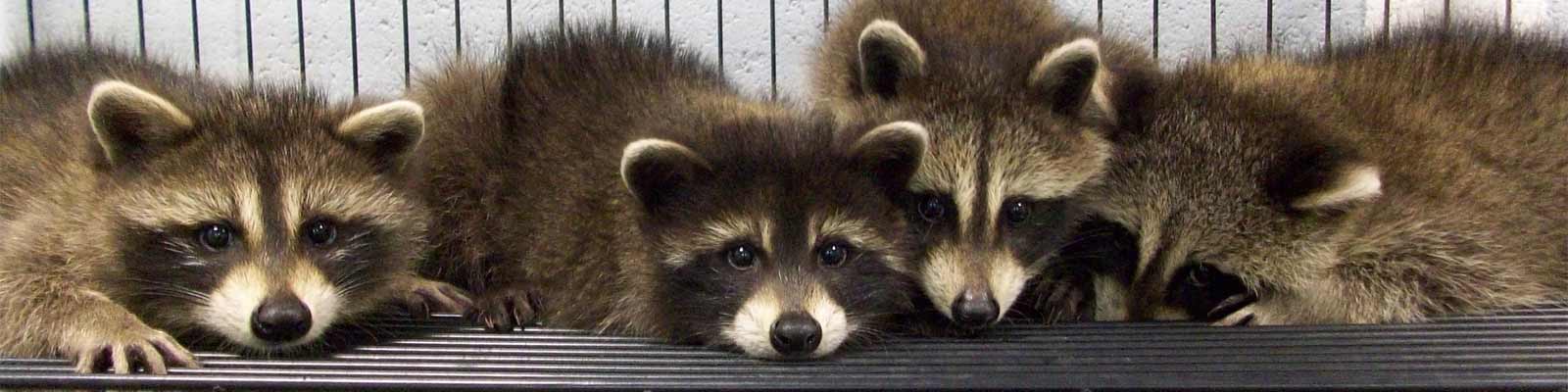
Please follow these instructions if you are attempting to reunite babies with their mother, or if you are waiting for a call back from a wildlife rehabilitator. Please note that Toronto Wildlife Centre is sometimes at capacity for common baby species, like raccoons, and you may need to seek assistance from another wildlife rehabilitator – please see the OMNRF list of authorized wildlife rehabilitators and/or the map on our website for more information.
What to do while you wait
A dark, quiet place
Keep the baby raccoon in a dark, quiet place indoors, in an enclosed or covered container such as a cardboard box or Rubbermaid bin. If your home is small, a closet or a bathroom is an excellent spot. A basement, heated garage, or spare bedroom will also work.
Keep children, pets, and people away from the room the raccoon is in. Remember that they are stressed and frightened. Unlike our pets, wild animals are not comforted by people talking to them, petting them, or looking at them.
A heat source
Providing a direct heat source is one of the most important things you can do to help baby raccoons. Babies may have been without their mother days and many are not old enough to thermoregulate yet. Keeping them warm will reduce stress on their system, once their body doesn’t have to fight to keep its temperature up. Some examples of an appropriate heat source include:
- a clean sock filled with dry, uncooked rice, and microwaved for one minute
- a plastic bottle from the recycling bin filled with hot tap water and wrapped in a tea towel or face cloth
- an electric heating pad set to “LOW” and placed under half of the box
- several chemical hand warmers (e.g. Hot Paws) that stay warm for up to 8 hours
Re-heat water bottles and rice socks as necessary. Once they have something warm to snuggle up to, most orphaned baby raccoon will go right to sleep.
Do not offer the raccoons food or water
This is a tough one, because our first instinct may be to give food or water to an animal we’ve found but there are some really good reasons not to.
Why shouldn’t I feed them?
- If the raccoon is dehydrated, starving, or suffering from trauma, their body may not be strong enough to digest food. Trying to feed them can cause bloating, shock, or death.
- Trying to force-feed food or water can accidentally end up with the liquid in the animal’s lungs. This can cause pneumonia, and death.
- If you feed the wrong food to the wrong species, it can cause serious digestive problems. Just as kittens must have kitten formula, and puppies must have puppy formula, each wild orphan must be given the formula that is designed to meet the dietary needs of that species; these formulas are not commercially available.
- If the baby is injured, or if reuniting fails and the the baby is taken to a wildlife rehabilitator, they will need to assess their condition and maybe run some medical tests. These are a lot easier to do if the animal hasn’t been eating. It’s just like when your doctor or veterinarian asks you or your pet not to eat the night before an appointment.
Why shouldn’t I give them water?
- If the raccoon is injured and having trouble standing, or if they panic trying to get out, they could fall into the water dish. This can cause hypothermia, or even drowning.
- Trying to force-feed water can accidentally end up with the liquid in the animal’s lungs. This can cause pneumonia, and death.
- If the baby is taken to a wildlife rehabilitator, they will need to assess their condition and maybe run some medical tests. These are a lot easier to do if the animal hasn’t been drinking. It’s just like when your doctor or veterinarian asks you or your pet not to eat or drink the night before an appointment.