First, get the baby raccoon contained

To keep the baby raccoon safe while you figure out how to help, get them contained.

Smaller babies

Put the baby in a small cardboard box or Rubbermaid bin with a soft towel or t-shirt. Even on a warm day or when indoors, small babies can get cold because they cannot thermoregulate, so give them a direct heat source:

  • a clean sock filled with dry, uncooked rice, and microwaved for one minute
  • a plastic bottle from the recycling bin filled with hot tap water and wrapped in a tea towel or face cloth
  • an electric heating pad set to “LOW” and placed under half of the box
  • several chemical hand warmers (e.g. Hot Paws) that stay warm for up to 8 hours

Do not give them any food or water – right now keeping them warm in a dark and quiet place is more important.

Larger babies

Larger babies can be lured into a cat or dog crate, or place a cardboard box or laundry basket over top of them. Put something heavy on top of the container to keep them in one place.

Is the baby raccoon injured?

A baby raccoon with any of the following signs is injured or orphaned and needs medical attention:

  • There are obvious wounds or blood on its body
  • There are lots of bugs or insects crawling all over it
  • They have been crying non-stop for over 24 hours (occasional, intermittent crying is normal)

Keep the baby warm, dark, and quiet, don’t give it any food or water, and contact a wildlife rehabilitator right away

Please note that Toronto Wildlife Centre is sometimes at capacity for common baby species, like raccoons, and if you have received a message stating that TWC is full for baby raccoons, you will need to seek assistance from another wildlife rehabilitator – please see the OMNRF list of authorized wildlife rehabilitators and/or the map on our website for more information.

Please click here for next steps and more information if you are unable to find a wildlife rehabilitator to help you.

Reuniting the raccoon with their mother

Sometimes baby raccoons can fall out of a den or get separated from their mother. If the baby isn’t injured, getting them back to mom is the best possible option. Raccoons are excellent mothers and will come back for their babies if given a chance! Raccoon moms will also take much better care of their babies than any human possibly could.

Place the box with the raccoon (and a heat source) as close as possible to where the raccoon was found. If there is a tree nearby, put it at the base of the tree. Raccoons don’t always den in trees, so next to a house or building will work too. Just don’t move the baby too far from where they were originally found.

Be patient

A baby raccoon should be left out for at least one whole overnight period to see if their mother will come back — raccoons are nocturnal, and most likely to come looking for their babies at night. Make sure to KEEP THE BABY WARM – refresh the heat source as needed. If the mother has started collecting some of her babies, you can leave the remaining babies out for reuniting for a second overnight period.

Don’t give the baby anything to eat or drink. Besides causing other potential health problems, we want  the baby to be hungry. If they’re hungry, they will cry, and the cries will call their mother.

What if it’s a really busy area?

In high traffic areas, you can put a sign on the box to let other people know that the raccoon is waiting for their mother. Here’s one you can print off. In very busy areas, it may make more sense to bring the baby inside and keep them somewhere dark and quiet for the day. As soon as the sun starts to set and traffic dies down, get the baby outside right away. No matter what, make sure to leave baby raccoons out for their mother for at least one whole overnight period. If the mother has started collecting some of her babies, you can leave the remaining babies out for a second overnight period.

What if the baby keeps crawling out of the box?

Older baby raccoons may not stay in the box you put them in. For these babies, cover them with an upside-down laundry basket. Put a brick on top of the laundry basket to keep it in place. The mother raccoon will have no trouble flipping the basket over to get her baby out.

What if it’s raining?

If it’s raining lightly, cover half of the box with a piece of cardboard. If it’s raining hard, bring the baby inside and keep them dark and quiet and warm. Put them back outside as soon as the weather clears up a bit. A mother raccoon won’t be looking for her babies during a heavy rain.

What if it’s during the day?

If you found the baby during the day, put them back out for their mother right away – although raccoons are nocturnal, mothers will still look for their babies during the day. They’re good moms. In very busy high-traffic areas, it may make more sense to bring the baby inside and keep it somewhere dark and quiet. As soon as the sun starts to set and traffic dies down, get the baby outside right away. No matter what, make sure to leave baby raccoons out for their mother for at least one whole overnight period. If the mother has started collecting some of the babies, remaining babies can be left our for a second overnight period.

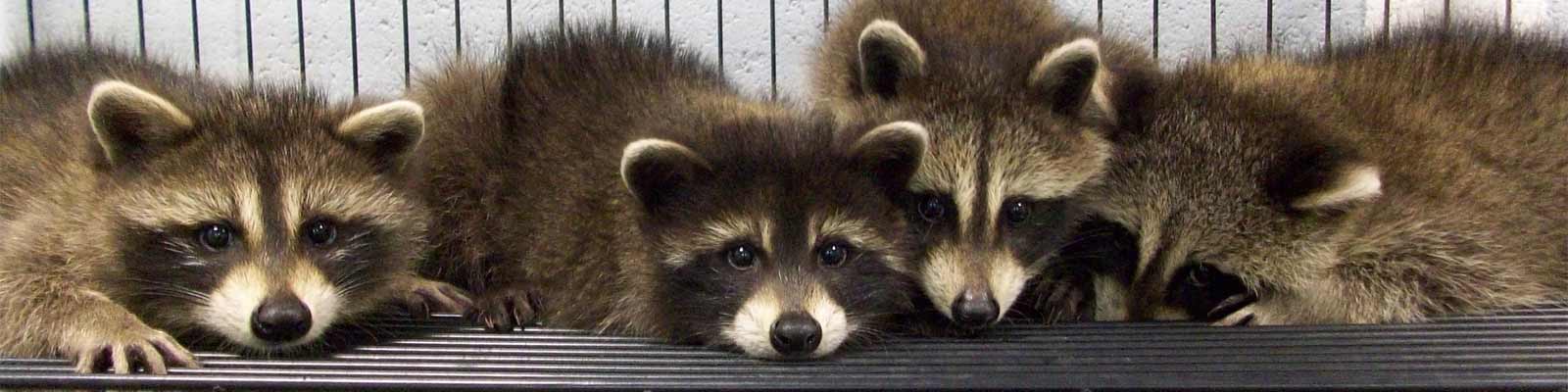
MYTH! If you touch a baby raccoon, its mother will NOT abandon it. Raccoons are excellent moms. All they want is their baby back.

Mom didn’t come back

If you’ve kept the babies warm and waited at least one whole overnight period, and mom has not retrieved ANY of the babies, they are probably orphaned. Mother raccoons almost never abandon their babies, but sometimes something happens to mom and she can’t make it back.

Make sure the babies are contained and have a heat source, don’t give them any food or water, and contact a wildlife rehabilitator for advice.

Please note that Toronto Wildlife Centre is sometimes at capacity for common baby species, like raccoons, and if you have received a message stating that TWC is full for baby raccoons, you will need to seek assistance from another wildlife rehabilitator – please see the OMNRF list of authorized wildlife rehabilitators and/or the map on our website for more information.

Please click here for next steps and more information if you are unable to find a wildlife rehabilitator to help you.

Temporary care

While you are waiting to hear back from a wildlife rehabilitator, keep the baby raccoon contained in a dark, quiet place. Make sure it has a heat source. Don’t give it any food or water until you have spoken to a rehabilitator. Further temporary care instructions can be found here.