
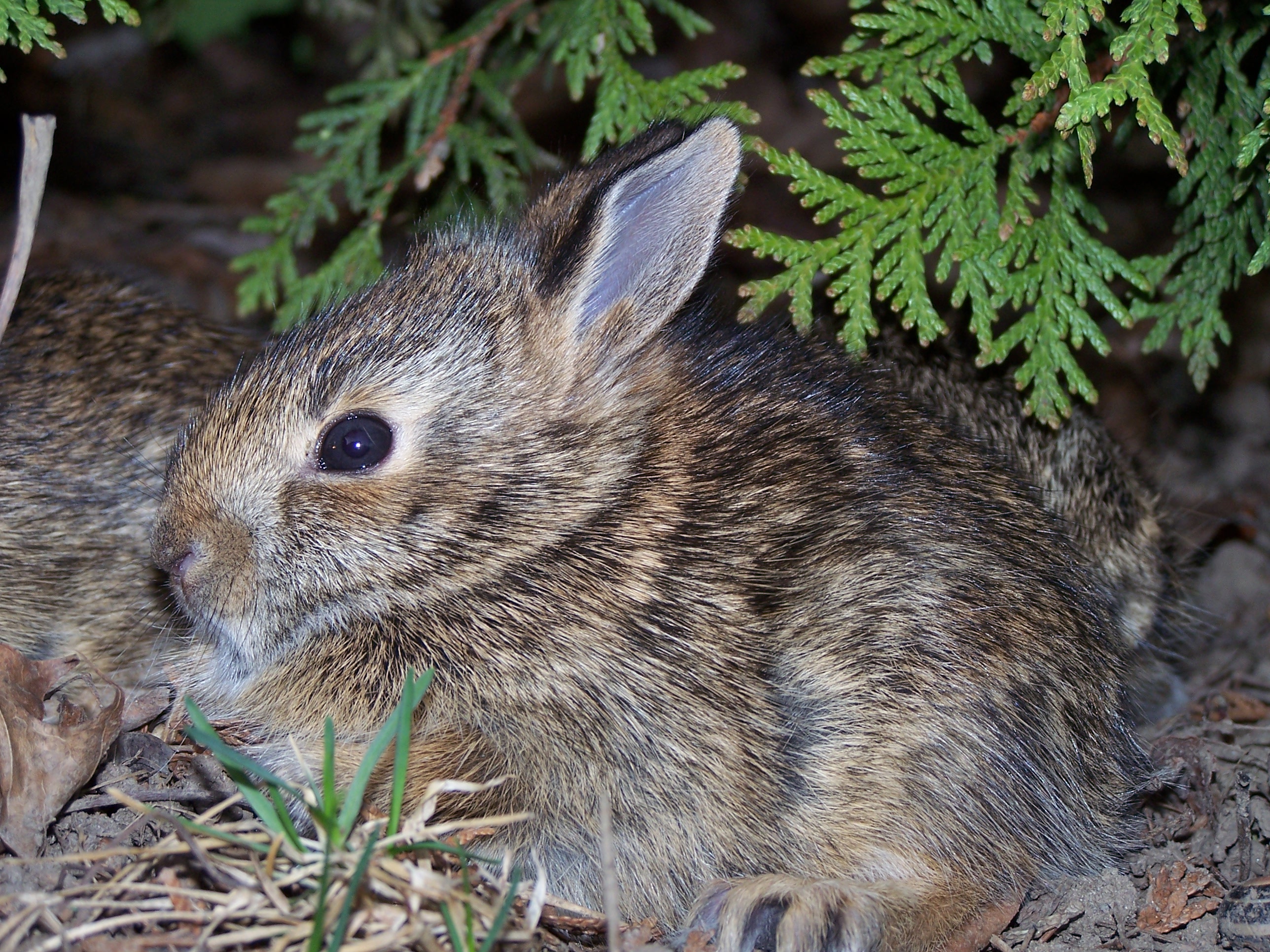
First, get the baby rabbit contained

To keep the baby rabbit safe while you figure out how to help them, put them in a small cardboard box with a soft towel or t-shirt and cover the box with a lid or towel. Even when indoors, or on a warm day, babies can get cold and even hypothermic, so give them a heat source:

  • a clean sock filled with dry, uncooked rice, and microwaved for one minute
  • a plastic bottle or jar with a tight-fitting lid from the recycling bin filled with hot tap water and wrapped in a tea towel or face cloth (secured to the box so that it does not squish the baby)
  • an electric heating pad set to “LOW” and placed under half of the box.
  • several chemical hand warmers (e.g. Hot Paws) that stay warm for up to 8 hours

Do not give the baby any food or water – right now keeping them warm, dark, and quiet is more important.

If you try to contain the baby but they run very fast and are hard to catch, leave them alone (but keep an eye on it!) and keep reading. It might be a normal situation.

CAUTION: Baby rabbits, even more than other wild animals, are EXTREMELY high-stress. This makes it even more important to keep them dark and quiet, and not to give them food or water.  DON’T PET THEM, DON’T FEED THEM, and keep people and pets away while you figure out how to get them help. 

Is the baby rabbit injured?

A baby rabbit with any of the following signs is injured and needs medical attention:

  • There are obvious wounds or blood on their body
  • They have had contact with a cat – even with no obvious injuries, this is a medical emergency for baby rabbits
  • They are lying on their side and can’t right themself (even very young, naked bunnies generally stay upright)

Keep the baby warm, dark, and quiet, don’t give them any food or water, and contact a wildlife rehabilitator right away.

Please note that Toronto Wildlife Centre is sometimes at capacity for common baby species, like cottontails. If you have received an email stating that we are full for cottontails, you will need to seek assistance from another wildlife rehabilitator. Please see the OMNRF list of authorized wildlife rehabilitators and/or the map on our website for more information.

The baby rabbit is not injured

If the rabbit is smaller than your fist (or a can of pop)

If the baby rabbit is smaller than your fist or a can of pop and does not try to run away from you, they are too young to be out of the nest. Look around to see if you can find the nest. The nest will be very well camouflaged and hard to find. If you find the nest and there are other healthy babies of the same size in it, you can tuck the baby you found in with the others.  Use the instructions on this page to test if the mother is coming back.

If you cannot find the nest, contact a wildlife rehabilitator.

If the rabbit is bigger than your fist (or a can of pop)

What does the rabbit do when you approach them? If they run away or try to hide or if they are hard to catch, they might be just fine. Cottontail rabbits are independent at about 3-4 weeks old. They may not be full-grown yet, but they can take care of themselves! Keep pets inside for now, until the rabbit leaves the area on its own. And keep an eye on the baby — if you’re worried it might be injured or sick, contact a wildlife rehabilitator for advice.

If the rabbit doesn’t hop or try to get away from you, there may be something wrong. Keep them contained, and dark and quiet, and contact a wildlife rehabilitator for advice.

Please note that Toronto Wildlife Centre is sometimes at capacity for common baby species, like cottontails. If you have received an email stating that we are full for cottontails, you will need to seek assistance from another wildlife rehabilitator. Please see the OMNRF list of authorized wildlife rehabilitators and/or the map on our website for more information.

MYTH! If you touch a baby rabbit, its mother will probably not abandon it. Rabbits are excellent moms. All they want is their baby back.

Temporary care

While you are waiting to hear back from a wildlife rehabilitator, keep the baby rabbit contained in a dark, quiet place. Make sure they have a heat source. Don’t give them any food or water until you have spoken to a rehabilitator. Further temporary care instructions can be found here.